Note: the Servlet technology is not limited to the HTTP protocol.
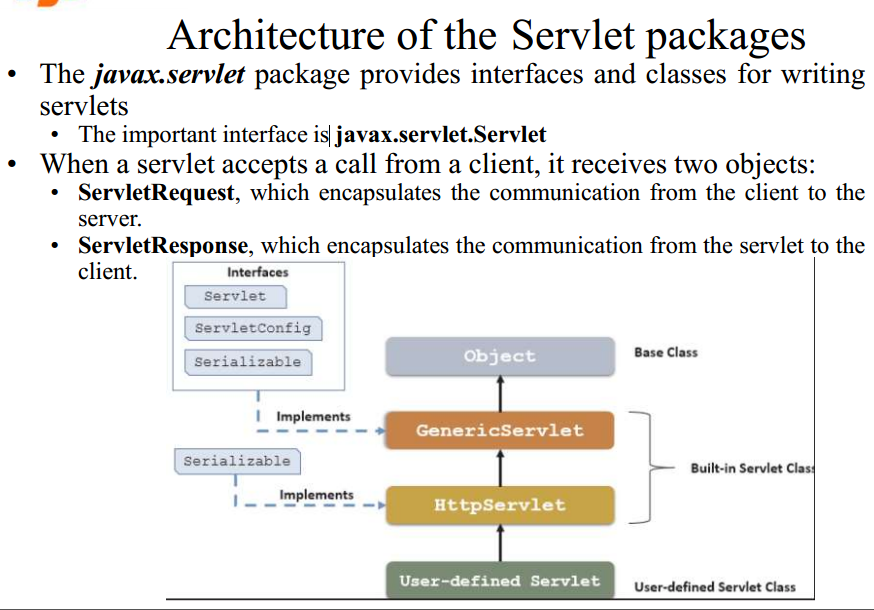
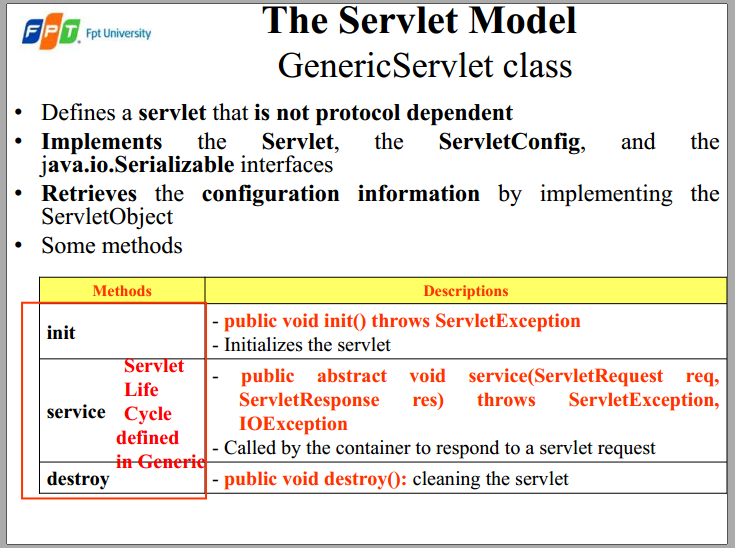
“Servlet interface” and “GenericSevlet Class” follow the idea that a servlet could be used for any type of service (”not protocol dependent”), such as HTTP, FTP,…etc,… → 2 parameters request and respond are protocol-agnostic.
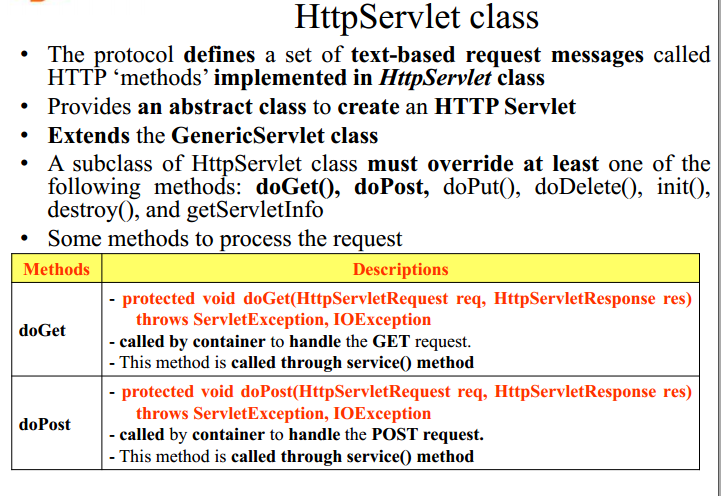
Are Java classes that dynamically process HTTP requests and construct responses.
a web component that runs on the server side (middle tier) and can act as a controller:
Are Java codes that are used to add dynamic content to Web server.
receive requests, handle and reply back with a response.
There is only a single instance of Servlet created on the Web server.
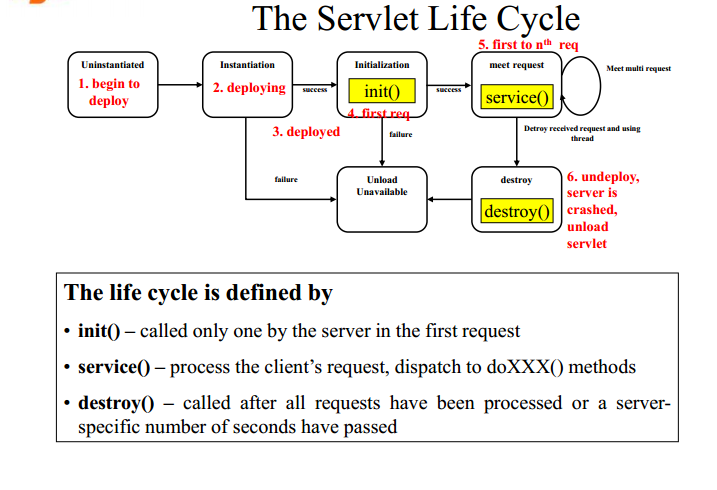
A Servlet’s initializing code is used only for initializing in the 1st time
To service multiple clients’ requests, the Web server creates multiple threads for the same Servlet instance (Overcome CGI’s consumed more memory)
Gets auto refreshed on receiving a request each time
Servlets are under the control of another Java application called a Servlet Container.
Merits
Enhanced efficiency (initializing only once, auto refresh)
Ease to use (using Java combining HTML)
Powerful (using Java)
Portable
Safe and cheap
Demerits
Low-level HTML documentation (Static well-formed-ness is not maintained)
Unclear-session management
(flow of control within the codes is very unclear)
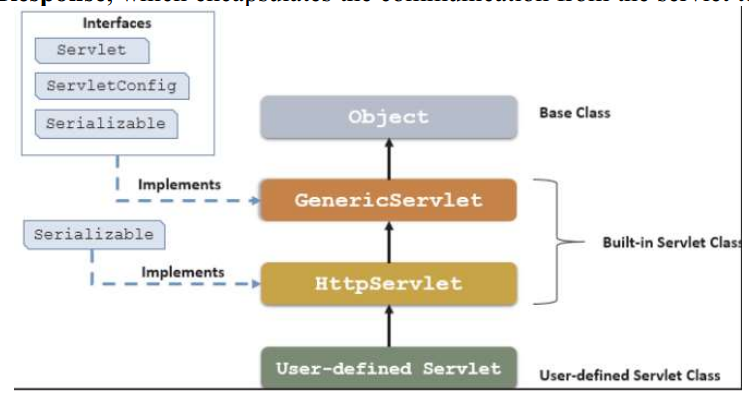
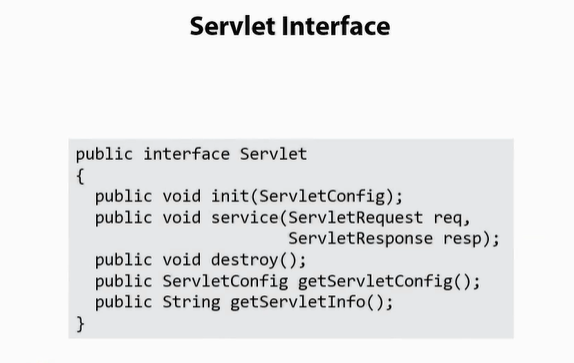
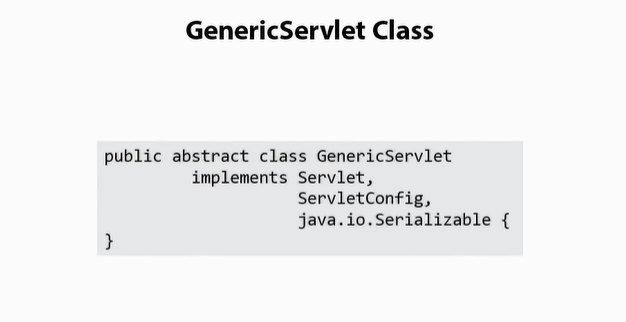
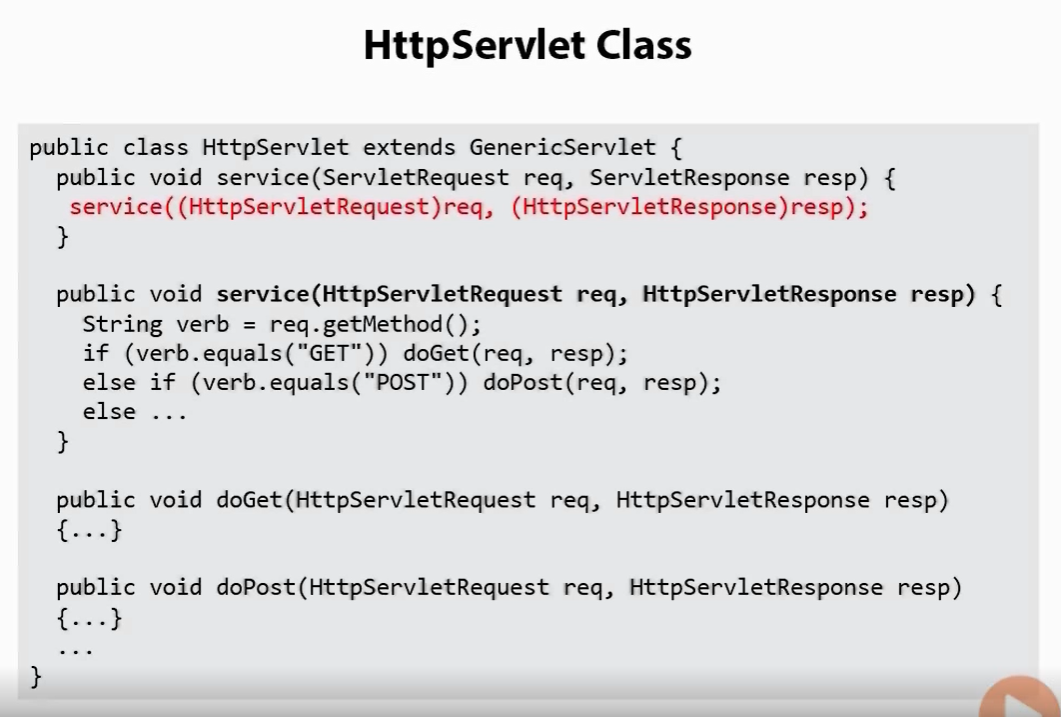
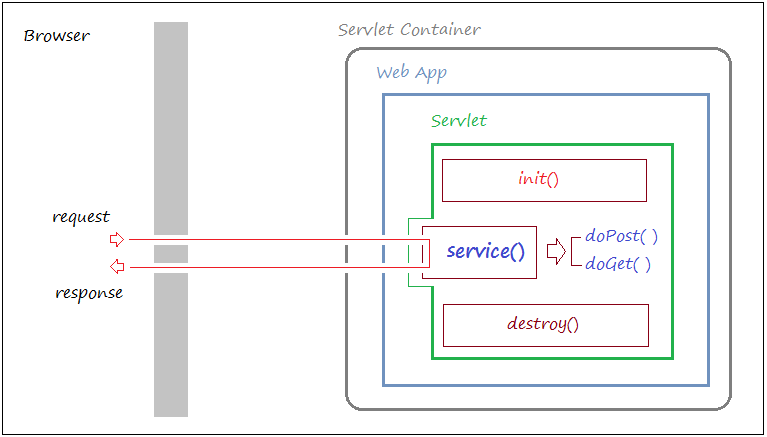
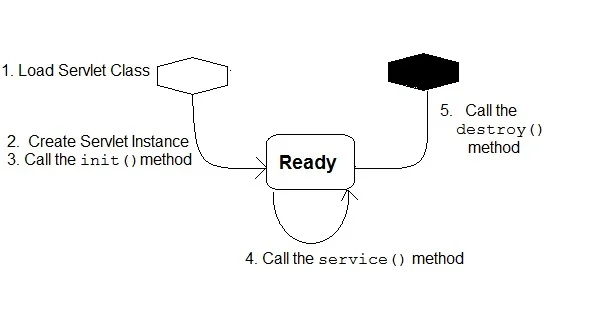


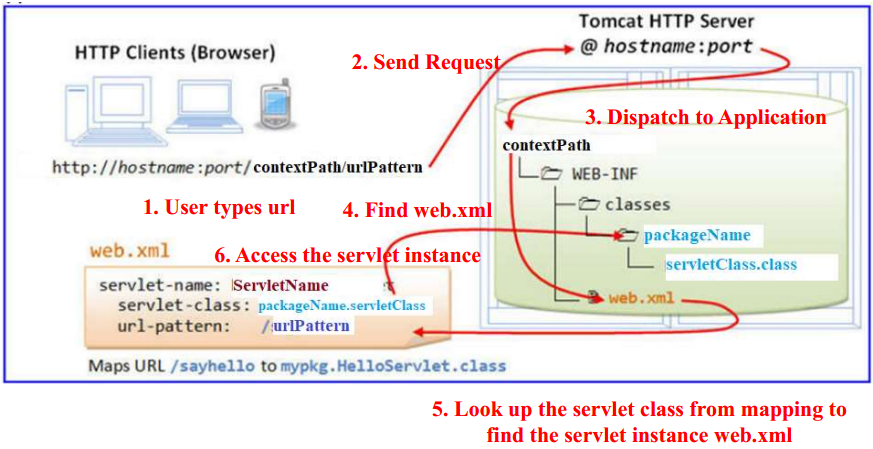
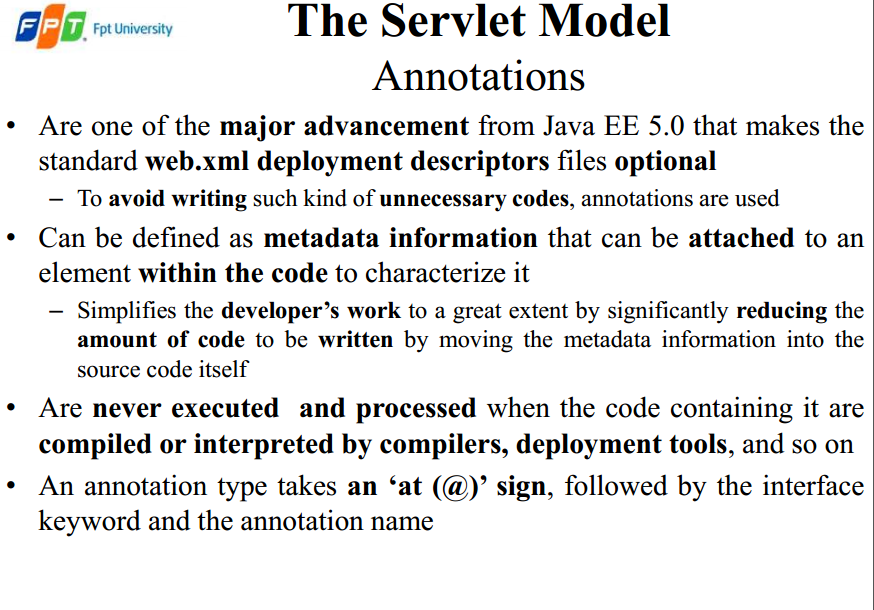
https://stackoverflow.com/questions/2183974/difference-between-each-instance-of-servlet-and-each-thread-of-servlet-in-servle
 Servlet (Java EE 6 )All Known Implementing Classes: FacesServlet, GenericServlet, HttpServlet Defines methods that all servlets must implement. A servlet is a small Java program that runs within a Web server. Servlets receive and respond to requests from Web clients, usually across HTTP, the HyperText Transfer Protocol.
https://docs.oracle.com/javaee/6/api/javax/servlet/Servlet.html
Difference between init() & init(ServletConfig)Question- What's the difference between init() & init(ServletConfig) and Which is better ? Before start we have to understand the servlet flow. Answer- For example you have servlet LoginServlet which extends HttpServlet public class LoginServlet extends HttpServlet{ } And your HttpServlet internally extends GenericServlet.https://www.asknsay.com/difference-between-init-and-init-servletconfig.html
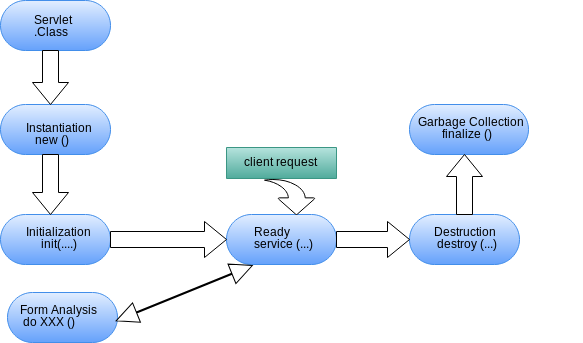
 Life Cycle of a Servlet - GeeksforGeeksThe entire life cycle of a Servlet is managed by the Servlet container which uses the javax.servlet.Servlet interface to understand the Servlet object and manage it. So, before creating a Servlet object, let's first understand the life cycle of the Servlet object which is actually understanding how the Servlet container manages the Servlet object.
 https://www.geeksforgeeks.org/life-cycle-of-a-servlet/#:~:text=There%20are%20three%20life%20cycle,destroy()
 Servlet Life CycleLoading Servlet Class : A Servlet class is loaded when first request for the servlet is received by the Web Container. Servlet instance creation :After the Servlet class is loaded, Web Container creates the instance of it. Servlet instance is created only once in the life cycle.
https://www.studytonight.com/servlet/servlet-life-cycle.php